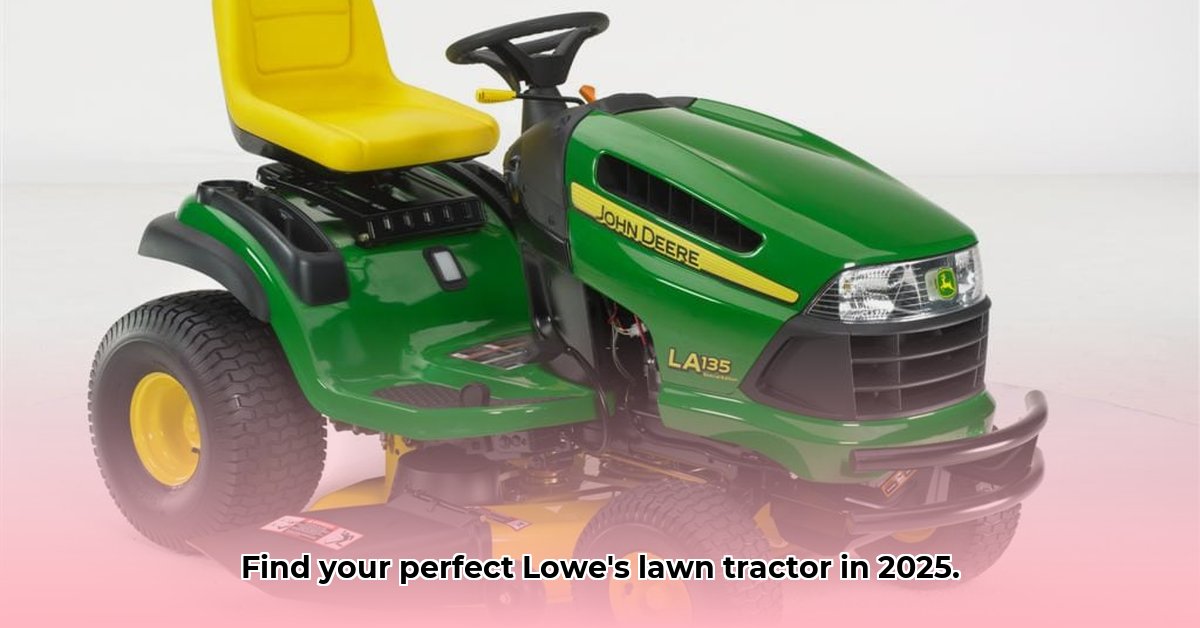
Lawn Tractor Selection: A Step-by-Step Guide
Choosing the right lawn tractor can feel overwhelming, but this guide will help you navigate Lowe's selection and find the perfect match for your yard and budget. We'll cover everything from assessing your lawn to choosing between gas, electric, and zero-turn mowers. Ready to get started? For more information on Roper lawn tractors, check out this helpful resource.
Assessing Your Lawn and Budget: The Foundation of Your Decision
Before you even look at horsepower ratings or deck sizes, it's crucial to understand your lawn and your financial limits. This will significantly streamline your search and help prevent buyer's remorse.
Lawn Size: What's the total area you need to mow? Small yards (under ½ acre) need less powerful machines. Medium-sized yards (½ - 1 acre) require more robust models. Large properties (over 1 acre) often benefit from the efficiency of zero-turn mowers.
Budget: Set a realistic budget before you begin shopping. Lawn tractors range in price from a few hundred to several thousand dollars. Knowing your limit prevents overspending and focuses your search.
Terrain: Is your yard flat, hilly, or uneven? Uneven terrain requires a mower with good traction and possibly anti-scalping features to protect your grass. Zero-turn mowers, while highly maneuverable, may not be ideal for extremely steep slopes. A gas-powered tractor may be more suitable for hilly terrain.
Choosing Your Lawn Tractor Type: Gas, Electric, or Zero-Turn?
Lowe's offers three primary types of lawn tractors, each with its own set of advantages and disadvantages:
Gas-Powered Mowers: The Workhorses
- Pros: Generally the most powerful and reliable, capable of handling larger, tougher lawns. Often the most affordable upfront cost for larger yards.
- Cons: Louder than electric options, require more regular maintenance (oil changes, tune-ups), and produce emissions.
Electric Mowers: Quiet and Eco-Friendly
- Pros: Quieter operation, environmentally friendly, and simpler maintenance than gas mowers.
- Cons: Limited run time on a single charge, typically less powerful than gas-powered models, making them unsuitable for very large or heavily vegetated lawns. Upfront cost can be higher due to battery technology.
Zero-Turn Mowers: Efficiency & Maneuverability
- Pros: Highly maneuverable, excellent for yards with obstacles, tight spaces, or large, open areas. This allows for efficient mowing of complex layouts.
- Cons: More expensive than other mower types and have a steeper learning curve. Some models may not be suitable for very steep hills.
Key Features to Consider:
Beyond the type of mower, several key features will significantly impact your mowing experience:
Deck Size (Cutting Width): A wider deck means fewer passes needed to cover your lawn, saving you time and effort. Consider your yard size when choosing a deck width.
Horsepower: More horsepower equals more cutting power, particularly helpful for thicker grass or challenging terrain.
Cutting Height Adjustment: Multiple height settings provide flexibility to customize the length of your grass.
Transmission Type: Hydrostatic transmissions offer smooth, infinitely variable speed control. Manual or automatic transmissions are also available.
Mulching Capability: Mulching mowers chop grass clippings finely, returning them to the lawn as fertilizer. This is preferable for lawn health, but not always suitable for every lawn condition.
Your Lowe's Lawn Tractor Shopping Plan: A 7-Step Approach
Measure Your Yard: Precisely measure your lawn's area and identify any challenging areas like hills or obstacles. Accurate measurements are essential for choosing the right mower size.
Set a Firm Budget: Establishing a budget prevents impulse buys and helps narrow your options significantly.
Decide on Mower Type: Based on your lawn size, needs, and budget, choose between gas, electric, or zero-turn.
Prioritize Key Features: Use the guidelines above to focus on critical features such as deck size and horsepower.
Read Online Reviews: Check out reviews from other Lowe's customers for valuable insights and real-world experiences.
Visit Lowe's (or Check Their Website): Browse the selection online to shortlist potential models, and if possible, visit Lowe's to see them in person.
Test Drive (If Possible): If available, test drive several models to assess their handling and ease of use before committing to a purchase. This is an essential final step before purchase.
Maximize Your Lawn Tractor Investment
Remember to consider factors beyond the initial purchase price, including maintenance costs, warranty coverage, and the mower's expected lifespan. By carefully considering these aspects, you'll find the perfect Lowe's lawn tractor to make yard work easier and more enjoyable.